


News
Celeres at Mission-K 2026: Space Heritage Meets Defence Resilience
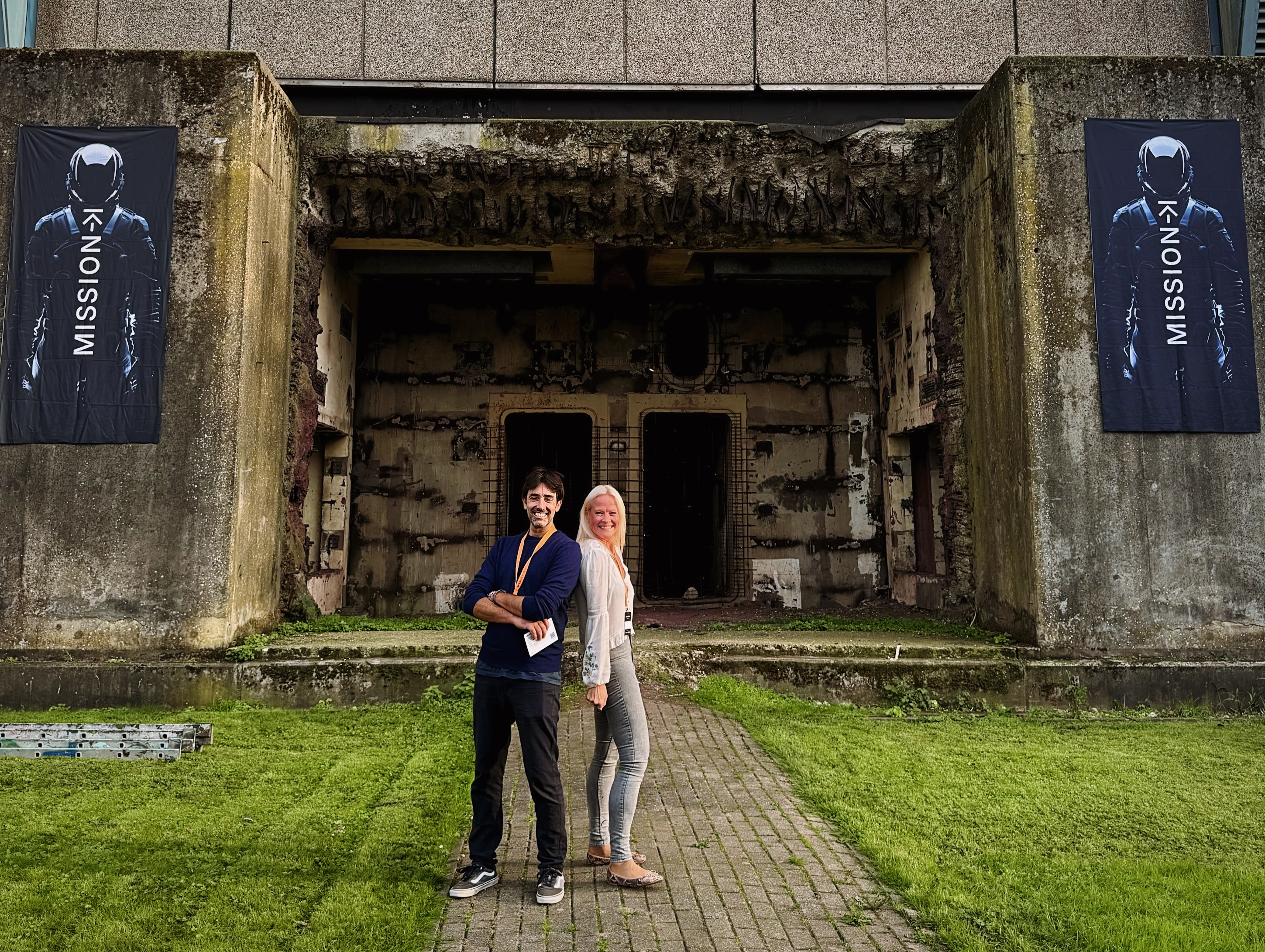
Mission-K 2026 marked our first direct engagement with the German Defence Space community. Our concept for Challenge 3, Project “Schildkröte”, was selected as one of the winning concepts for satellite control under combat conditions.
Mission-K 2026: a different format for Defence Space
On 29 and 30 September, we joined Mission-K as an exhibiting partner. The concept brought the German and wider European space and defence ecosystem together in a shared dome landscape. The goal was to put that network to work on concrete operational challenges and tackle them together.
Challenge 3: Satellite Control under Combat Conditions
Veronika Stihler and Eduard Díez Lledó took part in Challenge 3, a scenario addressing a critical need of the German Armed Forces (Bundeswehr). During an escalating military crisis, an inspection satellite approaches an uncooperative object in orbit for a Remote Proximity Operation. The question: how do you retain sovereign control of a satellite when the infrastructure, communications and even the information you normally trust can no longer be taken for granted?
Jamming, spoofing and cyberattack, disrupted command links, compromised nodes and vulnerable fixed infrastructure formed the operating environment. The requirement was not merely to protect the system, but to maintain secure command and control (C2) and freedom of action despite degradation.
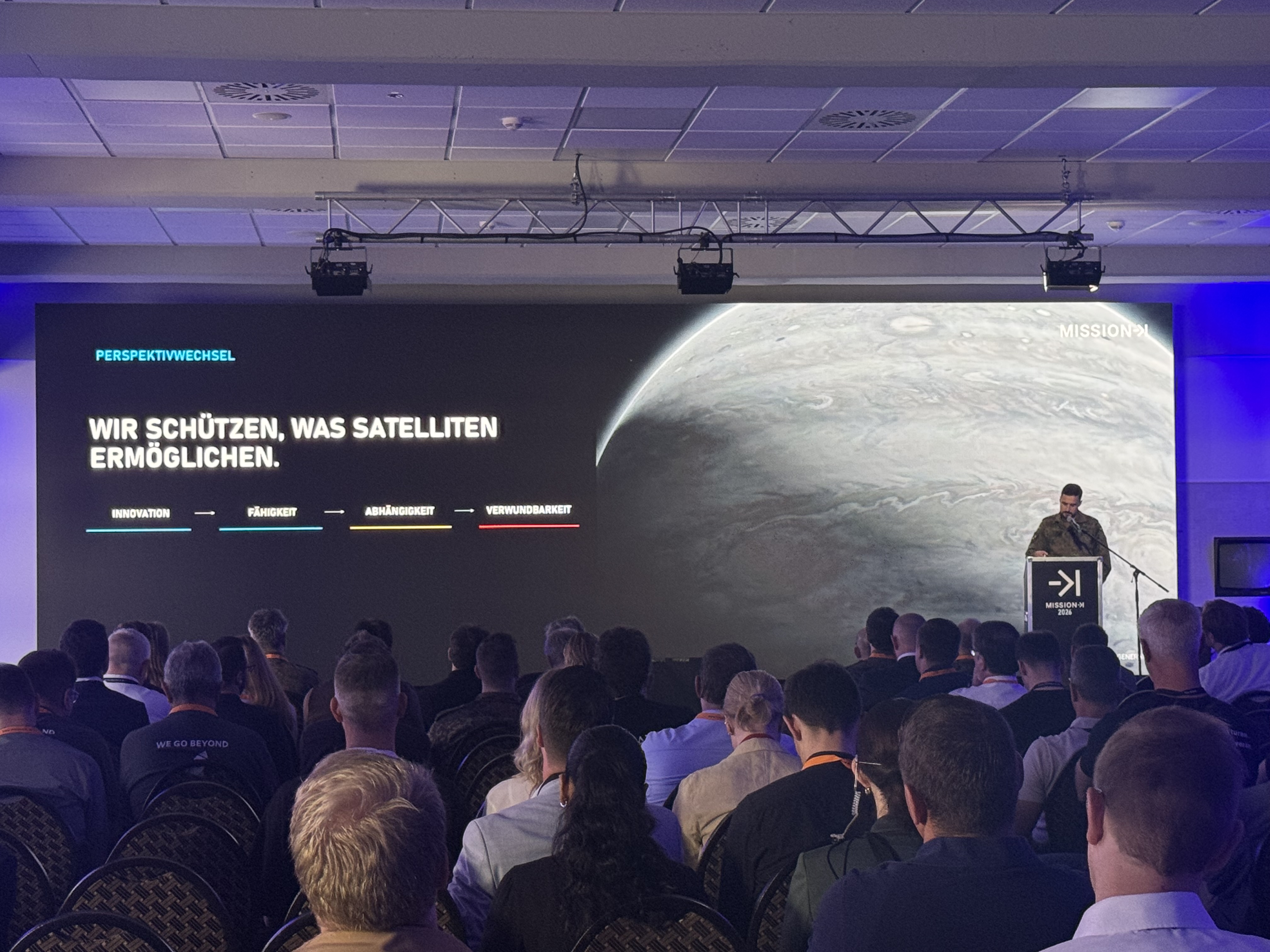
Project “Schildkröte”: distributed satellite command and control
Our multidisciplinary team of industry experts developed Project “Schildkröte”: a concept combining mobile and distributed ground elements, redundant communication paths and bounded onboard autonomy, allowing control to continue when individual components or connections become unavailable. As one of the winning concepts, Schildkröte was selected for final presentation in the extraordinary setting of the Kalkar reactor.
The exercise raises questions that reach well beyond one satellite. How distributed should future command architectures become? Where should decision-making and autonomy reside? And how do we preserve trusted C2 across space and ground in a contested, software-defined and increasingly multi-domain environment?
Space software heritage for Defence Space resilience
For Celeres, Mission-K has opened a valuable conversation about where nearly 40 years of [mission-critical space software and systems engineering](URL Our Expertise) heritage can contribute to the resilience and operational sovereignty now demanded in Defence Space.
It also shows the importance of knowledge transfer between industries. For us, this means bringing proven thinking in autonomy, verifiable and dependable open-source software, mission-critical systems and resilient architectures from the space environment to emerging operational needs in defence.
Next step: debrief with the German Space Command
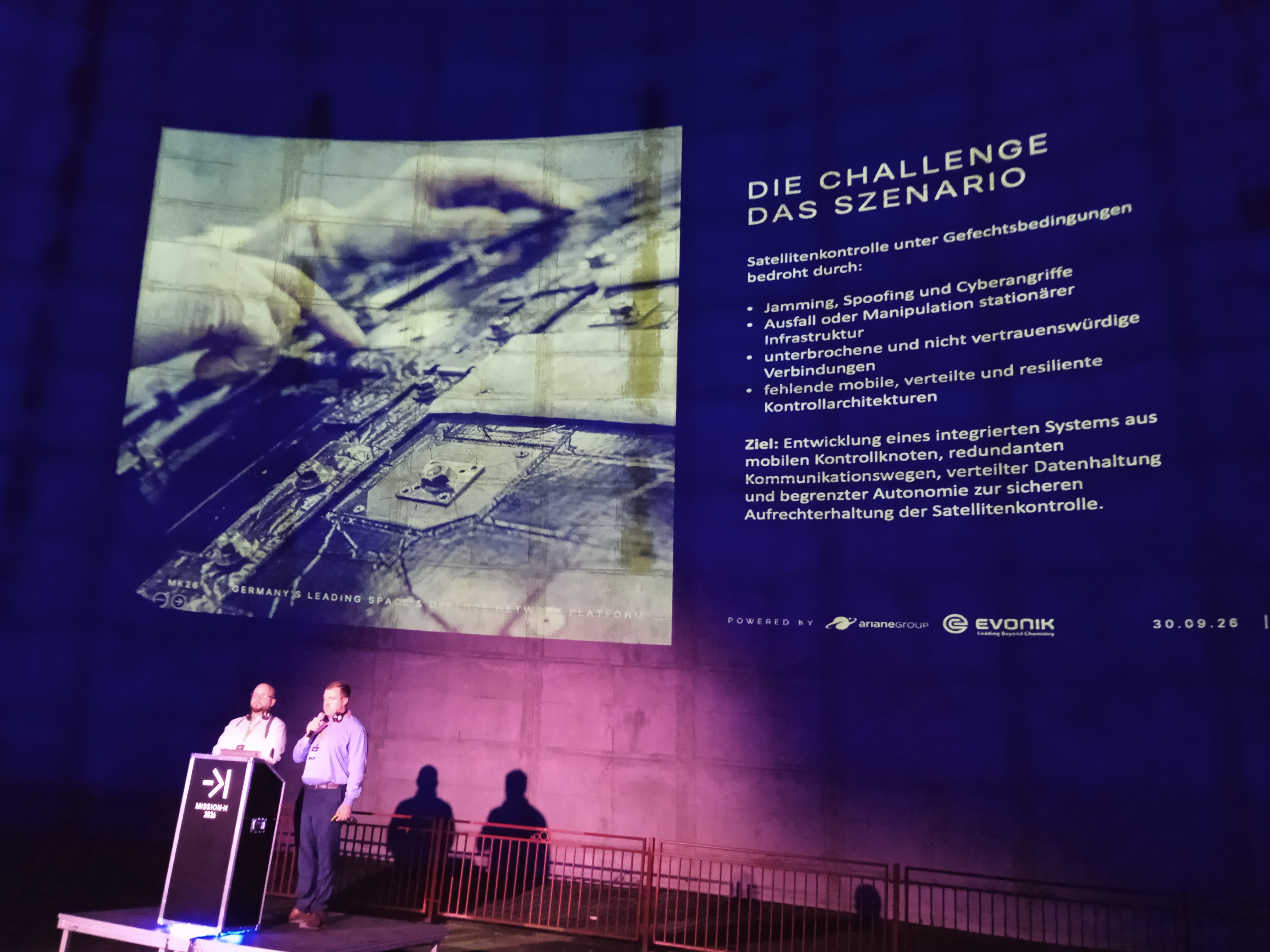
Mission-K ended after two days. The mission does not. A mission debrief led by Mission-K together with the German Space Command (Weltraumkommando der Bundeswehr) is targeted for December, and we look forward to continuing the discussion.
Explore our interactive Celeres architecture
This is the interactive architecture we exhibited and presented in the dome. Select the area of expertise that matters most to your programme and see where Celeres can add value.
Keep exploring the mission
Discover more insights, technical breakdowns, and updates from our engineering teams.

Latour Capital completes the carve-out of GTD Space & Security, renamed Celeres
GTD Space & Security becomes Celeres with backing from Latour Capital. A European leader in critical software and systems for space, defence and infrastructure.